Knee pain & movement
Knee pain on stairs or during squats: when should you see a physiotherapist?
Learn when knee pain on stairs or during squats can be watched, when to book a physiotherapy assessment, and which warning signs need medical care.
At a glance
Mild knee pain after an unusual increase in activity can sometimes be watched for a few days if you can walk normally and it is steadily improving. Book a physiotherapy assessment when stairs, squats, walking, sitting or sport remain limited, the pain keeps returning, or you are unsure how to reload the knee. Seek urgent medical care after a major injury, or if the knee is badly swollen or deformed, cannot take weight, is truly locked, or is hot and red with fever.

When does knee pain need urgent medical care?
Seek urgent medical assessment if you cannot move the knee or put weight on it, it is badly swollen or visibly changed in shape, it locks and will not straighten, or the pain followed a significant fall, collision or twisting injury. A hot, red knee with fever or feeling very unwell also needs prompt medical attention. These findings do not identify the cause by themselves, but they should not wait for a routine physiotherapy appointment.
Reference: NHS — Knee pain
Why can stairs and squats bring on knee pain?
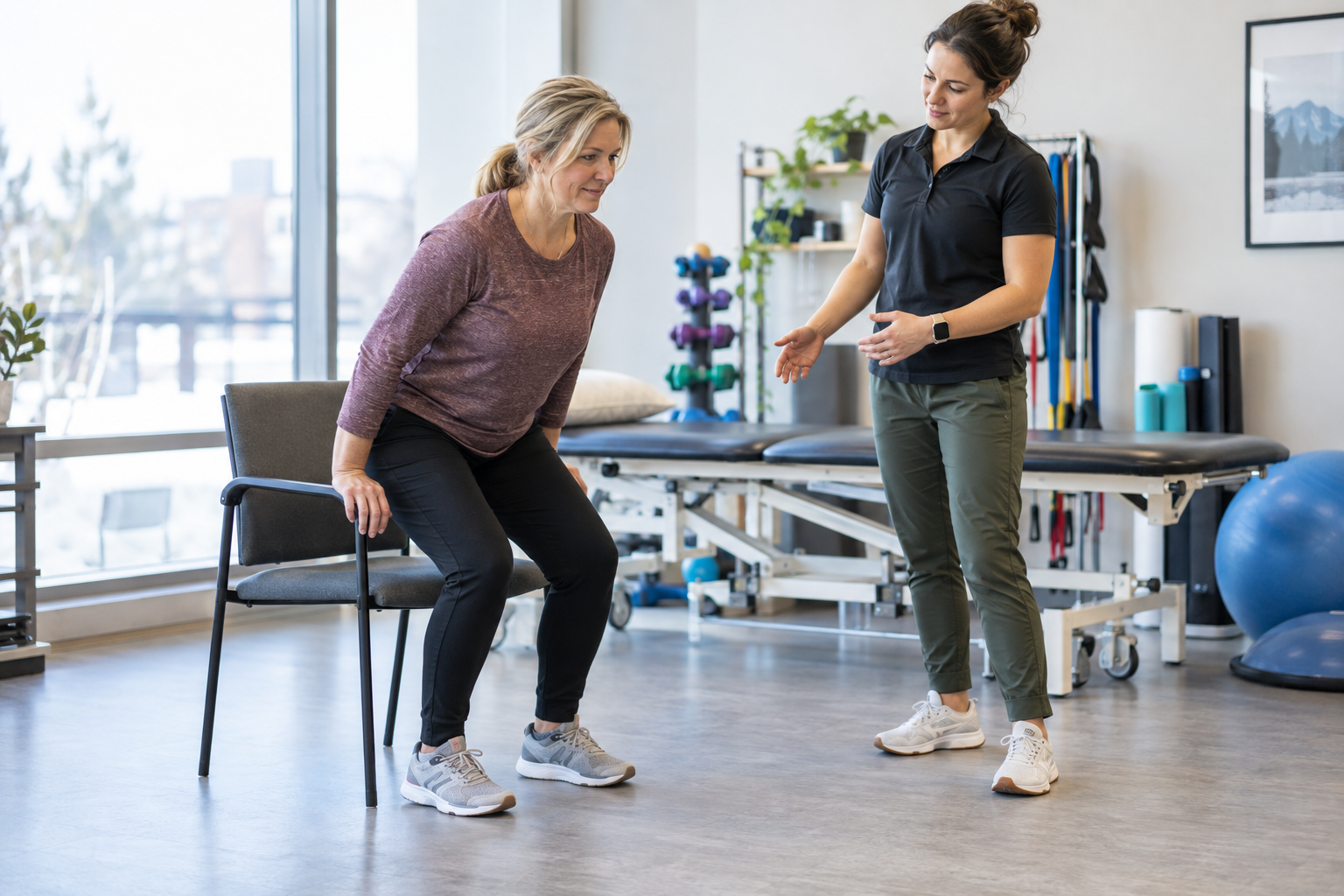
Stairs and squats ask the knee to bend while supporting body weight. Pain around or behind the kneecap is commonly aggravated by these loaded bending tasks, but that pattern alone does not prove one diagnosis. Symptoms can also come from other joint, tendon, meniscus or referred-pain problems, so the location of pain is only one part of the assessment.
A useful assessment looks at how the symptoms started, swelling, clicking or locking, training changes, and the exact tasks that are difficult. It then connects those findings with movement and strength rather than assuming that every painful squat is the same problem.
Reference: American Academy of Orthopaedic Surgeons — Patellofemoral Pain Syndrome · JOSPT — Patellofemoral Pain Clinical Practice Guideline
Can you watch it for a few days, or should you book an assessment?
Short self-observation can be reasonable when discomfort is mild, there was no major injury, walking is comfortable, there is no important swelling or locking, and the overall trend is improving. Temporarily reduce the depth, load or number of painful repetitions rather than repeatedly testing the knee. Keep comfortable daily movement if it does not cause a clear flare-up.
Consider an assessment when you are changing how you use stairs, avoiding squats, losing confidence in the knee, repeatedly swelling after activity, or unable to return to work, the gym, running or sport. You can also book earlier when you simply do not have a clear and safe progression plan; there is no requirement to wait until pain becomes severe.
What does a physiotherapy knee assessment check?
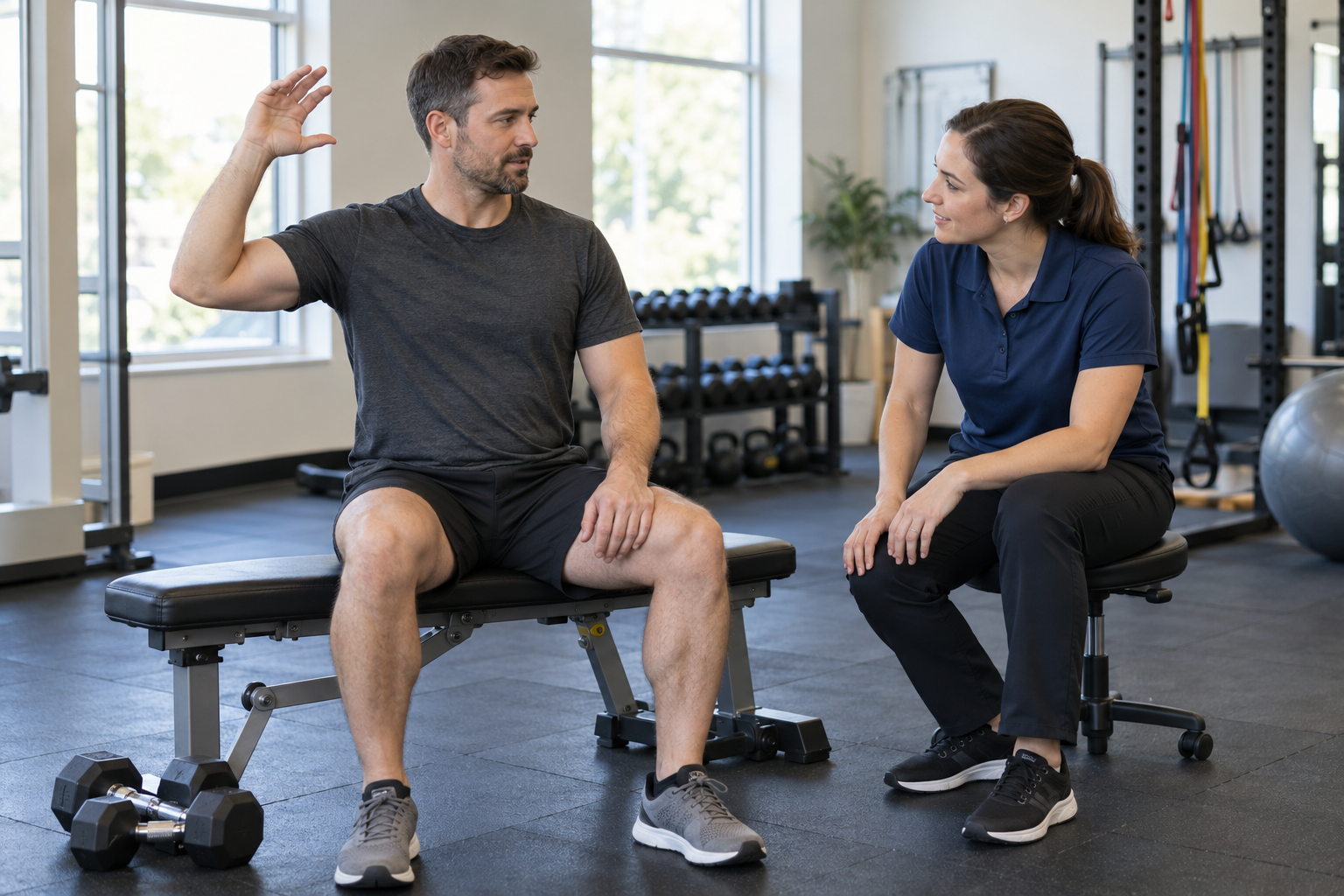
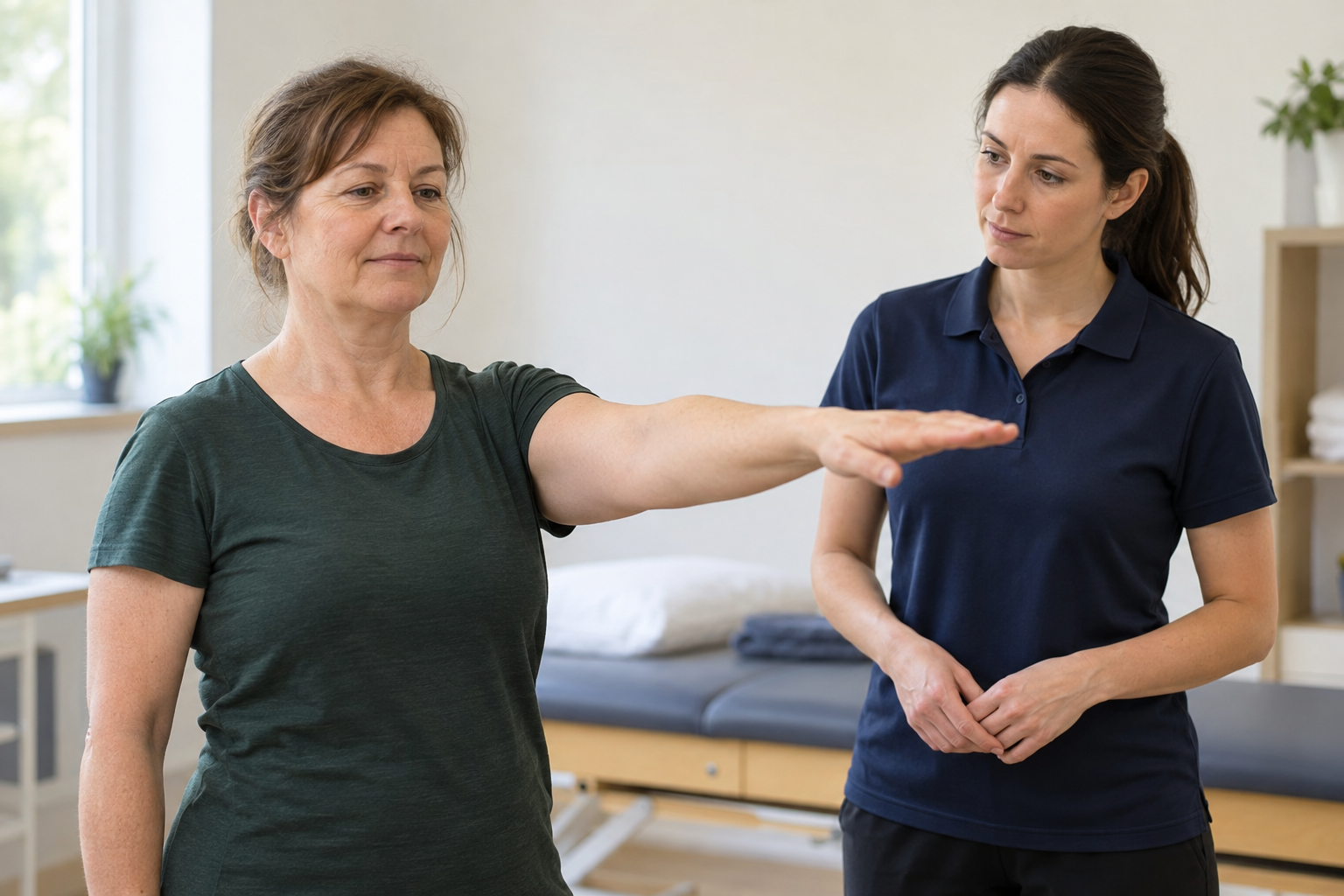
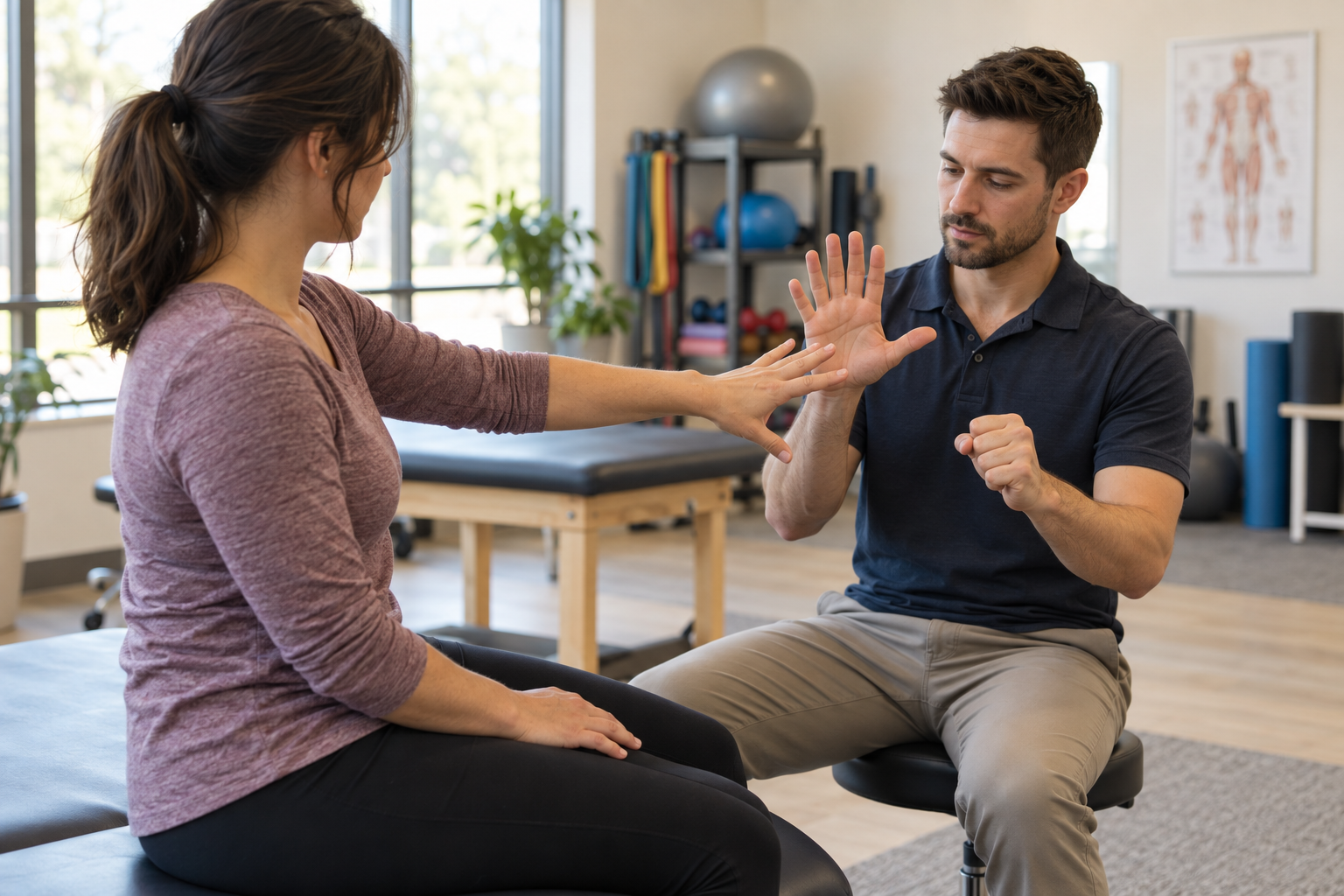
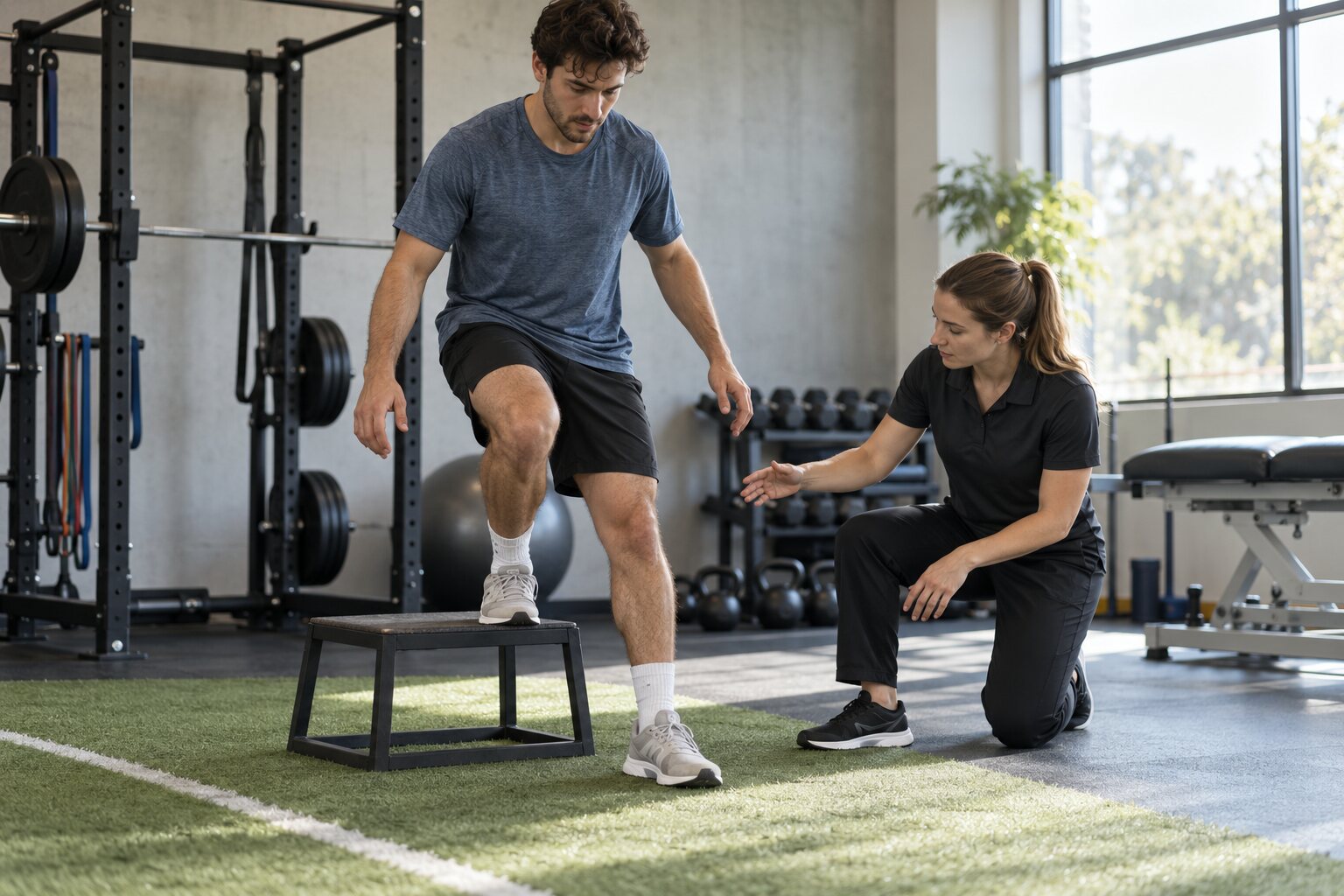
The first visit starts with your history, goals and the activities you need to regain. The physical examination may include swelling, knee and hip movement, strength, walking, balance, a squat or step-down, and selected ligament or meniscus tests when the history makes them relevant. Not everyone needs the same tests.
The goal is to identify what is limiting function, screen for findings that may need medical follow-up, and agree on a practical starting point. Care may include education, changes to activity, hands-on treatment when appropriate, and progressive exercise matched to your current capacity and goals.
Reference: College of Physiotherapists of Ontario — Collaborative Care Resources
Do you need an X-ray or MRI before physiotherapy?
Not every episode of knee pain needs imaging before an assessment. The decision depends on the injury history, examination and whether the result would change care. Choosing Wisely Canada advises that MRI often adds little when weight-bearing X-rays already show more than mild osteoarthritis, unless a musculoskeletal specialist recommends it.
If the knee is locked, repeatedly swelling, unstable after trauma, or not progressing as expected, further medical assessment may be appropriate. Bring any existing reports to your appointment, but do not delay urgent care for warning signs while trying to arrange a scan yourself.
Reference: Choosing Wisely Canada — Radiology Recommendations · Choosing Wisely Canada — Sport and Exercise Medicine Recommendations
Book a knee assessment in Markham
Harrison Zhang, MScPT, is an Ontario Registered Physiotherapist practising at Space Wellness, 2800 John Street, Unit 21, Markham. The initial assessment and treatment appointment is 60 minutes and CAD $145. Care is available in English, Mandarin Chinese and Cantonese. Use the appointment form below or call +1 (942) 380-2599 for availability.
Frequently asked questions
Does knee pain on stairs always mean arthritis?
No. Stairs can aggravate several knee problems, including pain around the kneecap, and the symptom pattern alone cannot confirm arthritis. Age, injury history, swelling, movement and examination findings all matter.
Should I stop squats completely if my knee hurts?
Not always. A temporary change in depth, load, speed or number of repetitions may be enough, but the right adjustment depends on the cause and irritability of your symptoms. Stop and seek assessment if swelling, instability, locking or worsening pain develops.
Do I need an X-ray or MRI before seeing a physiotherapist?
Usually not. Many people can begin with a history and physical examination. Imaging is considered when the findings suggest a specific concern and the result is likely to change care; urgent warning signs should be assessed medically first.
What should I bring to a knee physiotherapy appointment?
Bring your health and medication information, any relevant reports, and clothing that allows the knee and movement to be assessed. Think about which daily, work or sport activities you most want to regain.
Do I need a doctor's referral for physiotherapy in Ontario?
The College of Physiotherapists of Ontario does not require a referral for assessment or treatment outside a hospital. Your extended-health insurer may still require one for reimbursement, so check your individual plan.
Sources & further reading
- American Academy of Orthopaedic Surgeons — Patellofemoral Pain Syndrome ↗
- JOSPT — Patellofemoral Pain Clinical Practice Guideline ↗
- NHS — Knee pain ↗
- Choosing Wisely Canada — Radiology Recommendations ↗
- Choosing Wisely Canada — Sport and Exercise Medicine Recommendations ↗
- College of Physiotherapists of Ontario — Collaborative Care Resources ↗
External references support the general information in this article. Clinic information is specific to Harrison Zhang Physio. Sources checked: .
General information only. This article does not diagnose an injury or replace an individual assessment. Your care and recovery will depend on your own circumstances.