Neck pain & nerve symptoms
Neck pain with hand numbness: physiotherapist or doctor?
Learn when neck pain with hand tingling or numbness may suit a physiotherapy assessment, when to contact a doctor, and which warning signs need urgent care.
At a glance
Stable neck pain with intermittent hand tingling or numbness can often begin with a physiotherapy assessment, especially when symptoms change with neck or arm position and are limiting work, sleep or activity. Contact a doctor promptly when numbness is persistent or worsening, or when true weakness is developing. Call 911 for sudden facial droop, inability to raise both arms, speech difficulty, or another sudden stroke-like change; new walking problems, loss of hand coordination, or bladder or bowel changes also need urgent medical assessment.
First: which symptoms need urgent medical care?
Call 911 immediately for sudden facial droop, new inability to lift or keep up both arms, or slurred or jumbled speech—even if the symptoms improve. Sudden one-sided numbness or weakness, especially with vision change, severe headache or loss of balance, may also be a stroke warning sign and should not wait for a physiotherapy appointment.
Arrange urgent same-day medical assessment for new or rapidly worsening weakness, new difficulty walking or balancing, loss of hand coordination such as suddenly dropping objects or struggling with buttons, numbness or weakness affecting both arms or the legs, or new bladder or bowel changes. After a significant fall, collision or other neck trauma with neurological symptoms, seek medical care first.
Reference: Government of Canada — Stroke signs and FAST · NHS Inform — Degenerative cervical myelopathy · American Academy of Orthopaedic Surgeons — Cervical Spinal Cord Compression
Does hand numbness mean a pinched nerve in the neck?
Not necessarily. An irritated cervical nerve root can cause neck or shoulder pain with symptoms travelling into the arm or hand, including tingling, numbness and weakness. However, similar symptoms can arise from a peripheral nerve at the elbow or wrist, another neurological condition, or a non-musculoskeletal problem. The finger involved is useful information, but it is not enough to diagnose the source by itself.
The timing and behaviour of symptoms matter: whether they began suddenly or gradually, stay in one hand or affect both sides, change with neck or arm position, wake you at night, or are accompanied by dropping objects or loss of strength. A careful assessment is more useful than naming a nerve from an online diagram.
Reference: American Academy of Orthopaedic Surgeons — Cervical Radiculopathy (Pinched Nerve)
When can you start with physiotherapy, and when should you see a doctor?
A physiotherapy assessment can be a reasonable first step when symptoms are stable, there was no major trauma, and you do not have the warning signs above. Common reasons to book include symptoms that keep returning, interfere with desk work, driving, sleep or exercise, or leave you unsure which movements are safe.
Contact a doctor promptly when numbness is constant or spreading, strength is clearly decreasing, symptoms are worsening despite modifying activity, or your health history raises another concern. A physiotherapist should also refer or collaborate when the assessment suggests that your needs are better addressed by another provider.
Reference: College of Physiotherapists of Ontario — Assessment, Diagnosis, Treatment Standard
What will a physiotherapy assessment check?
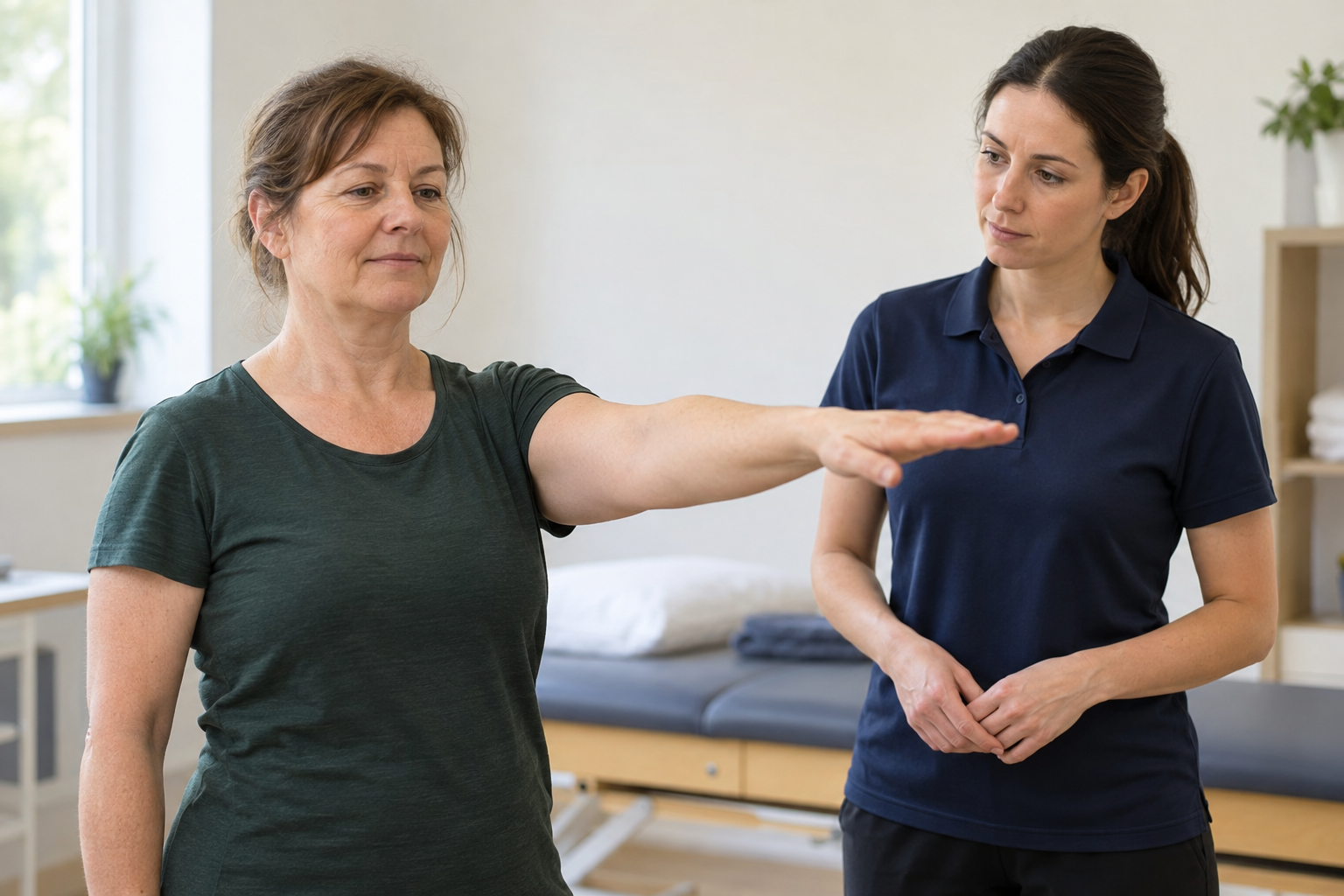
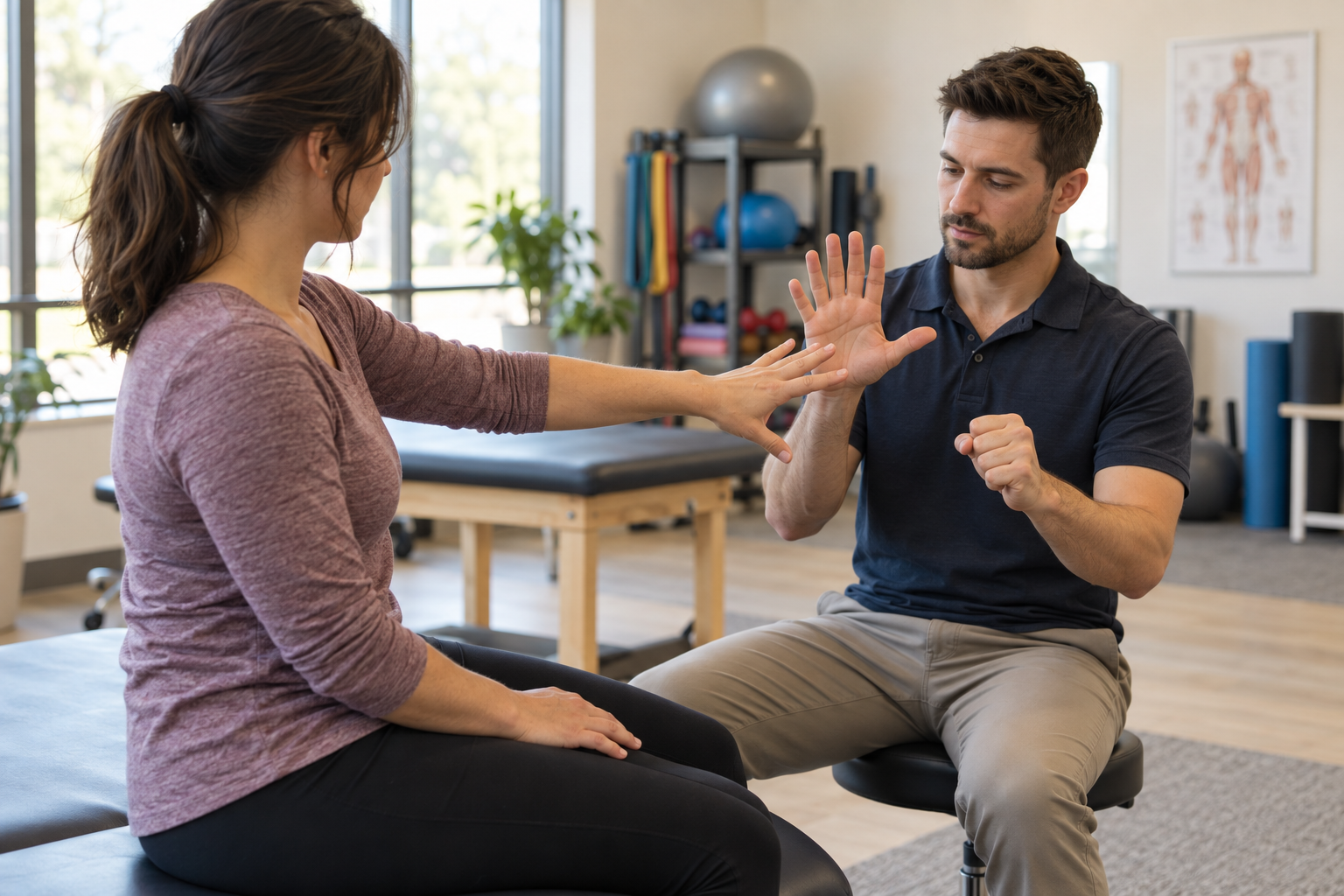
The assessment begins with your symptom history, health history and the activities you need to regain. The physical examination may compare neck and shoulder movement, arm and hand strength, sensation and reflexes, and may include selected upper-limb nerve or symptom-reproduction tests. Walking, balance and hand coordination are screened when the history makes them relevant.
The purpose is not to force every symptom into a single label. It is to identify the likely pattern, look for findings that change the urgency or require medical follow-up, establish a baseline, and agree on a safe next step. Findings are interpreted together rather than relying on one special test.
Reference: American Academy of Orthopaedic Surgeons — Cervical Radiculopathy (Pinched Nerve) · College of Physiotherapists of Ontario — Assessment, Diagnosis, Treatment Standard
What can you do safely while arranging an assessment?
Avoid repeatedly forcing a neck position that clearly sends symptoms farther into the arm or hand. Change prolonged positions, take brief movement breaks, and keep comfortable daily activity rather than testing the symptoms over and over. Note which fingers are affected, how long episodes last, what changes them, and whether grip or arm strength is changing.
Do not begin aggressive neck stretching, traction or manipulation based only on an online diagnosis. Exercise and hands-on care should be selected after screening and matched to your presentation. If any warning sign develops, stop self-management and seek the appropriate medical care.
Reference: JOSPT — Neck Pain: Revision 2017 Clinical Practice Guideline
Do you need an X-ray or MRI before physiotherapy?
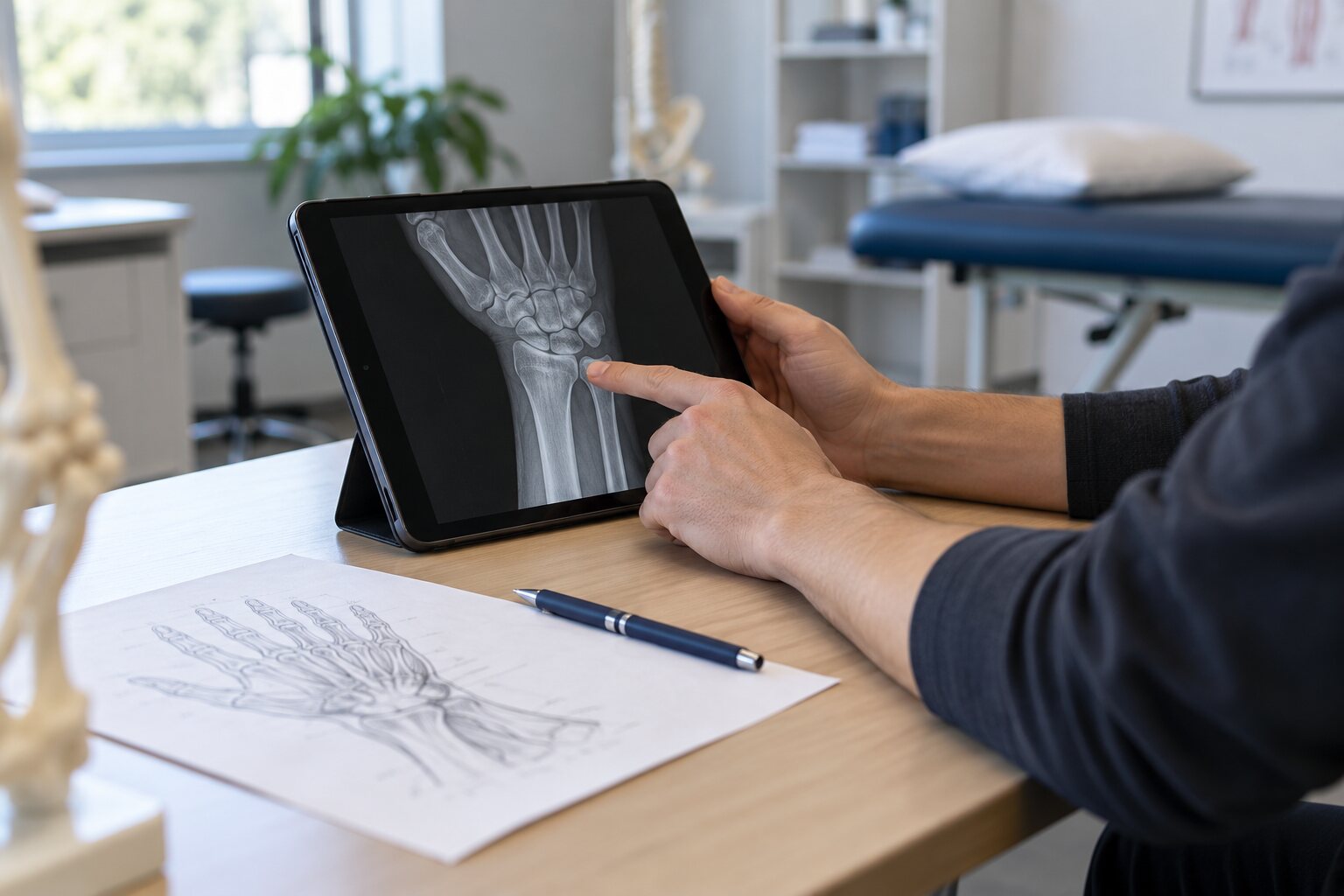
Imaging is not an automatic first step for every episode of neck pain or hand tingling. The history and neurological examination help determine whether imaging is likely to answer a useful question. The American College of Radiology notes that MRI without contrast is usually appropriate for new or increasing cervical radiculopathy, while different clinical concerns may call for different tests.
If you already have an imaging report, bring it to the appointment. Imaging findings need to be interpreted alongside your symptoms and examination, and urgent warning signs should not wait while you try to arrange a scan yourself.
Reference: American College of Radiology — Cervical Neck Pain or Cervical Radiculopathy
Book a neck and neurological screening assessment in Markham
Harrison Zhang, MScPT, is an Ontario Registered Physiotherapist practising at Space Wellness, 2800 John Street, Unit 21, Markham. The initial assessment and treatment appointment is 60 minutes and CAD $145. Care is available in English, Mandarin Chinese and Cantonese. Use the appointment form below or call +1 (942) 380-2599 for availability.
Frequently asked questions
Is hand tingling always caused by the neck?
No. A cervical nerve root can cause arm or hand symptoms, but irritation of a peripheral nerve at the elbow or wrist and other health conditions can produce similar sensations. The pattern, physical examination and neurological screen need to be considered together.
Can a physiotherapist assess numbness and tingling?
Yes. A physiotherapist can take a relevant history and screen movement, strength, sensation, reflexes and function. If the findings suggest urgent or additional medical investigation, the physiotherapist should direct or refer you to the appropriate provider.
Which fingers are affected by a pinched nerve in the neck?
Different nerve roots can be associated with different areas of the arm and hand, but real symptom patterns often overlap and do not always follow a textbook map. Finger location alone cannot confirm which nerve is involved or whether the source is in the neck.
Do I need an MRI before booking physiotherapy?
Not always. Many people can begin with a history and neurological examination. Imaging is considered when the findings suggest it is likely to change care, particularly with new or increasing neurological deficits or another specific concern.
Do I need a doctor's referral for private physiotherapy in Ontario?
The College of Physiotherapists of Ontario does not require a referral for assessment or treatment outside a hospital. Your extended-health insurer may still require a referral for reimbursement, so check your individual plan.
Sources & further reading
- American Academy of Orthopaedic Surgeons — Cervical Radiculopathy (Pinched Nerve) ↗
- American Academy of Orthopaedic Surgeons — Cervical Spinal Cord Compression ↗
- NHS Inform — Degenerative cervical myelopathy ↗
- Government of Canada — Stroke signs and FAST ↗
- JOSPT — Neck Pain: Revision 2017 Clinical Practice Guideline ↗
- American College of Radiology — Cervical Neck Pain or Cervical Radiculopathy ↗
- College of Physiotherapists of Ontario — Assessment, Diagnosis, Treatment Standard ↗
- College of Physiotherapists of Ontario — Collaborative Care Resources ↗
External references support the general information in this article. Clinic information is specific to Harrison Zhang Physio. Sources checked: .
General information only. This article does not diagnose an injury or replace an individual assessment. Your care and recovery will depend on your own circumstances.