Shoulder pain & returning to the gym
Shoulder pain with bench or overhead press: when to see a physio?
Shoulder pain keeps returning when you press? Learn when to seek assessment, what to change at the gym, and how a return-to-lifting plan is reviewed.
At a glance
Consider a physiotherapy assessment when shoulder pain repeatedly returns during bench or overhead press, limits everyday movement, or makes it difficult to resume training. Mild symptoms that are clearly settling may be monitored while you reduce the provoking activity. A sudden painful pop with bruising or weakness, severe pain, or the warning signs below needs medical attention first.
When should you seek medical care first?
Call 911 for shoulder or arm discomfort with chest pressure, shortness of breath, sweating or faintness. Heart attacks can also occur without obvious chest pain; do not assume these symptoms are a gym injury.
Seek urgent medical assessment for sudden severe pain, inability to move the arm, a changed shoulder shape, major swelling, persistent numbness, or a hot shoulder with fever. A cold or discoloured arm after injury warrants emergency care.
Reference: Heart & Stroke — Signs of a heart attack · NHS — Shoulder pain
What if you felt a pop during bench press?
Stop lifting and seek prompt medical assessment if a painful pop or tearing sensation is followed by chest or inner-arm bruising, marked weakness, or a change in the chest or armpit contour. A pectoralis tendon injury is one possibility, especially while lowering a heavy bar. These signs cannot be diagnosed online, and testing another heavy set could delay appropriate care.
Reference: AAOS OrthoInfo — Pectoralis tendon tear
Can you adjust training first, or is it time to book?
If discomfort is mild, improving and unaccompanied by warning signs, temporarily reduce the movements that provoke it while keeping comfortable daily activity. Watch the response later that day and the next morning, rather than judging only the last repetition. Worsening pain or declining movement is a reason to stop testing the exercise and seek advice.
Book an assessment if the same problem keeps returning, everyday tasks or sleep are affected, or you cannot progress back to training. If symptoms are worsening or have not begun to improve after about two weeks, contact a healthcare professional. You can ask for help sooner when you are uncertain; two weeks is not a required waiting period.
Reference: NHS Dorset — Rotator cuff related shoulder pain · NHS My Joint Health Hub — Shoulder strain · NHS — Shoulder pain
What would a shoulder assessment check?
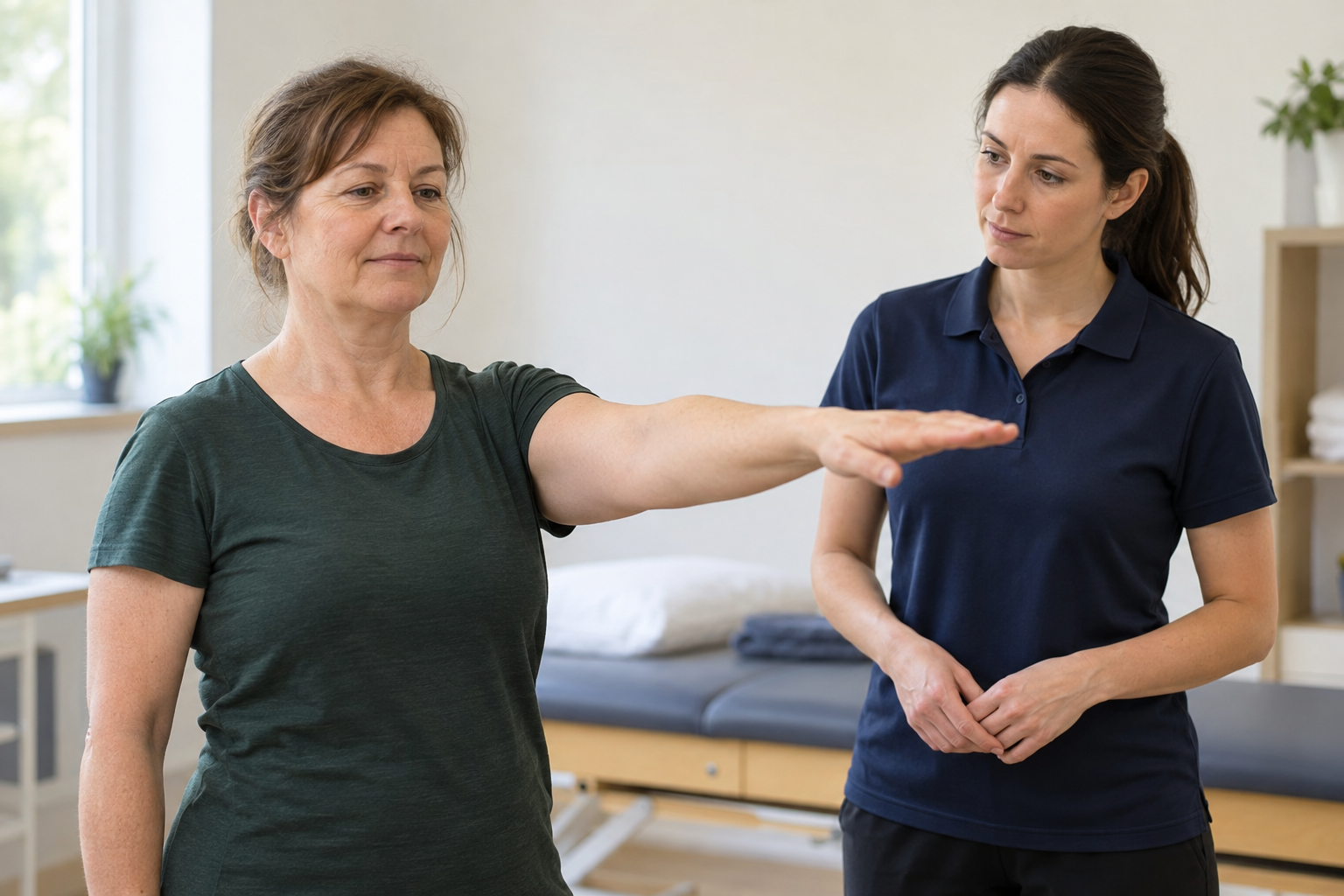
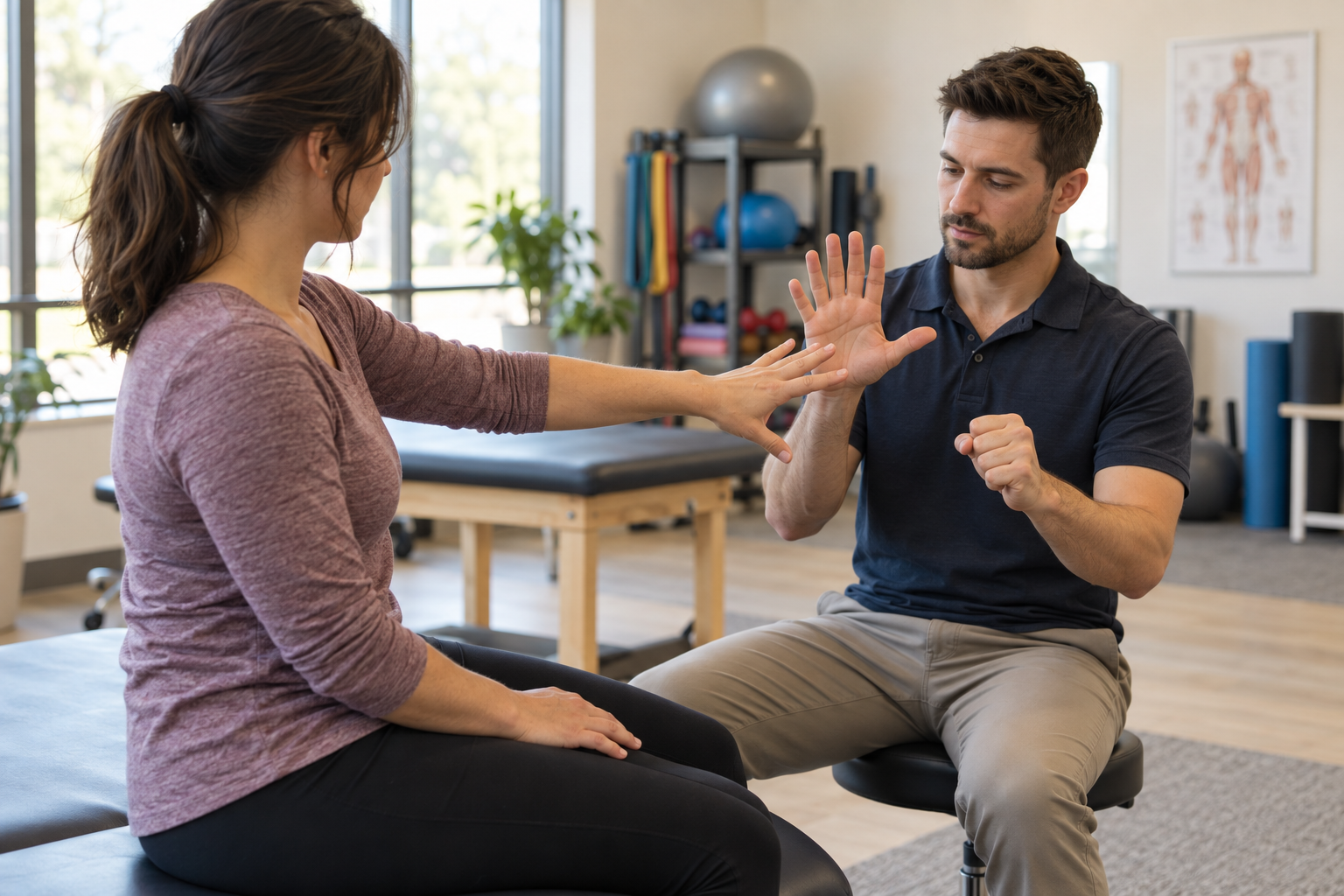
Assessment combines your injury and health history with shoulder movement and strength testing, and neck or neurological screening when relevant. Your training demands and goals matter too. For rotator cuff tendinopathy, the 2025 clinical guideline supports individual education and active rehabilitation; that diagnosis should not be assumed from a painful press alone.
Reference: JOSPT (2025) — Rotator cuff tendinopathy clinical practice guideline
Bring these training notes to your appointment
A short note on your phone can make the conversation more specific. Record what you already experienced; you do not need to reproduce a painful lift for the appointment.
- Which exercise, equipment and part of the movement bothered you?
- What were the weight, sets and repetitions? What had recently changed?
- What happened afterwards, overnight and the following morning?
- What would a useful return look like: a comfortable workout, a work task or a particular lift?
How do you work back towards normal lifting?
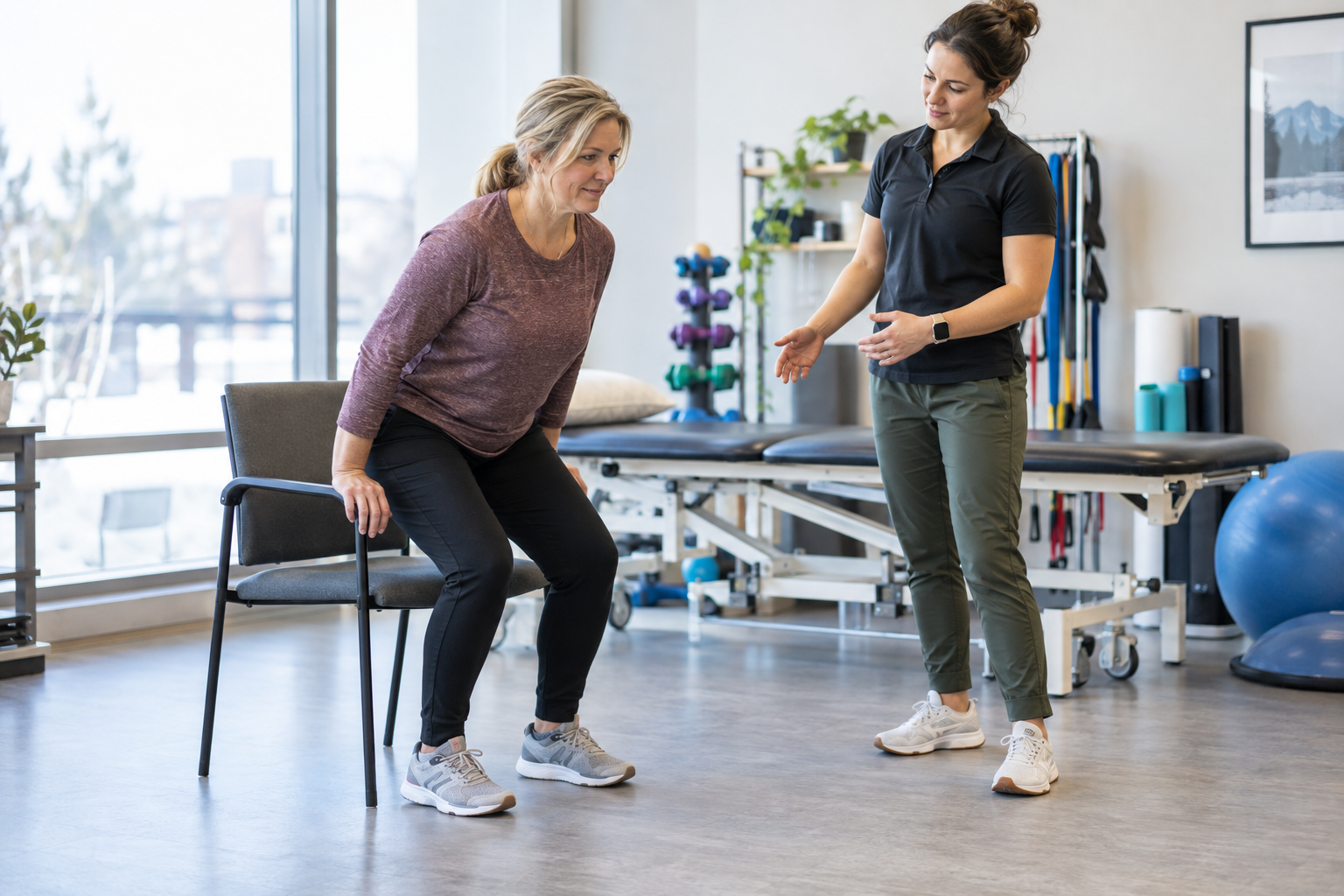
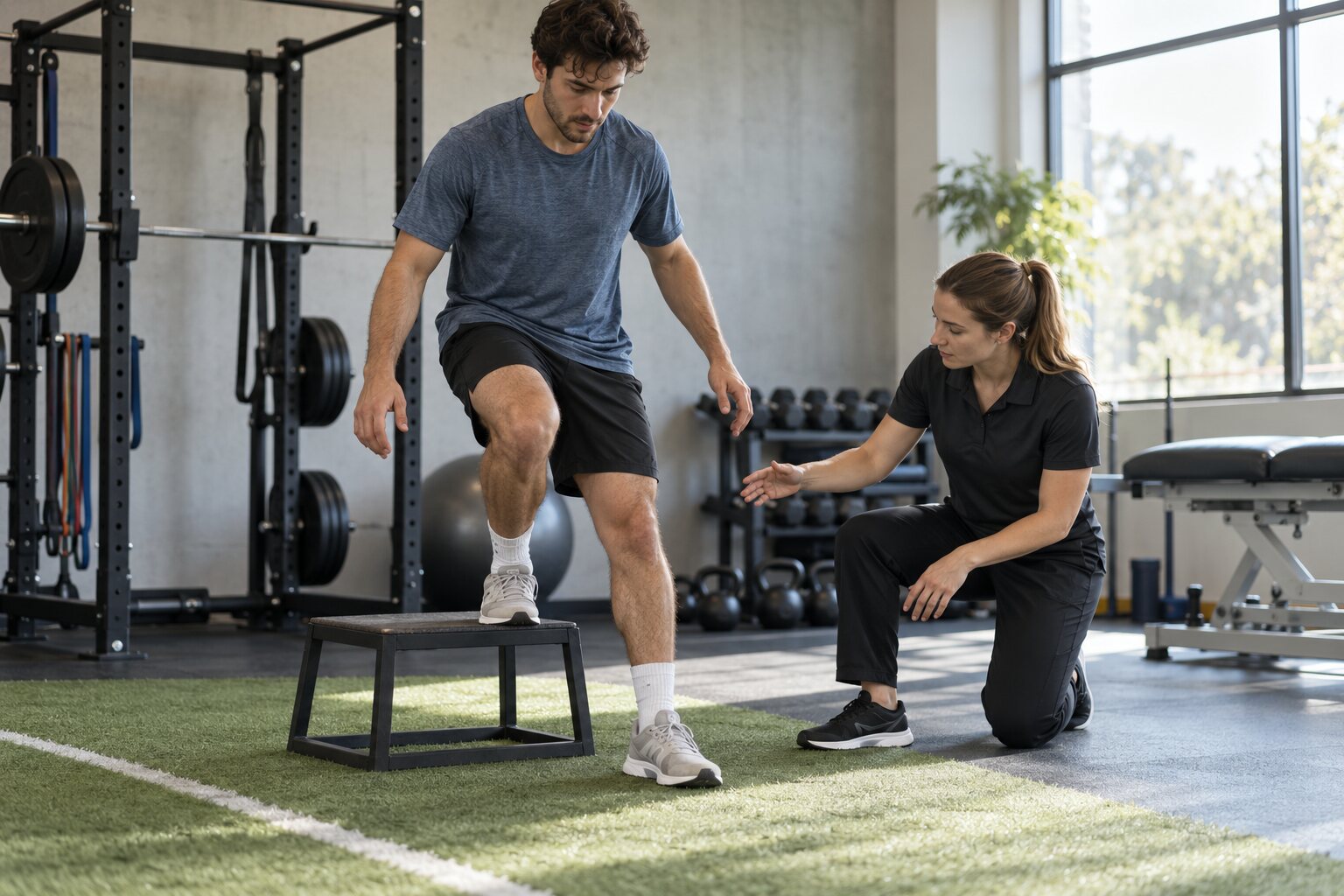
A return plan should rebuild movement and strength before demanding full training again. Your clinician may start with a tolerable version of the task and gradually increase its demands. Sharp or increasing pain, renewed swelling or loss of strength calls for reassessment, not pushing through the set.
The Bern shoulder consensus recommends an individual, principle-based approach to return to sport. Discuss how progress will be judged, including confidence and the demands of your own activity. A calendar date alone cannot tell you whether your previous working weight is appropriate.
Reference: Leeds Community Healthcare NHS — Return to activity or sport after injury · JOSPT (2022) — Bern consensus on shoulder rehabilitation and return to sport
Where can you book a shoulder assessment with Harrison?
Harrison Zhang, MScPT, is a Registered Physiotherapist offering care in English, Mandarin and Cantonese. At Space Wellness in Markham, an initial assessment and treatment appointment is 60 minutes and costs C$145. Use the form below to request a time, or call +1 (942) 380-2599 for availability; a submitted form still needs appointment confirmation.
North York appointments are available through NTO's own booking system, with its fees and policies. If you live in Richmond Hill, compare the Markham and North York addresses below and choose the journey that suits you.
Frequently asked questions
Do I need to stop going to the gym completely?
Not automatically. Keep comfortable activity and reduce the movements that aggravate symptoms. An assessment can help identify suitable alternatives if you cannot exercise without worsening the shoulder.
If pain eases during the warm-up, can I lift normally?
Feeling better during one set is not enough to judge the whole response. Also consider symptoms afterwards and the next day. Repeated flare-ups deserve review before increasing the challenge.
Should I switch to dumbbells or change my grip?
Bring that question and your current programme to the assessment. The useful choice depends on your findings and response; this article cannot select a grip, exercise or weight for your shoulder.
Do I need an MRI before booking physiotherapy?
Not routinely for suspected rotator cuff tendinopathy. Examination helps decide whether imaging would change care. Significant trauma, suspected major injury or persistent symptoms may require medical assessment and imaging.
How long until I can use my usual weights?
There is no single timeline. Recovery and the demands of the lift vary. Agree on a gradual plan and review movement, strength and activity tolerance before returning to full training.
Sources & further reading
- NHS — Shoulder pain ↗
- Heart & Stroke — Signs of a heart attack ↗
- AAOS OrthoInfo — Pectoralis tendon tear ↗
- NHS Dorset — Rotator cuff related shoulder pain ↗
- NHS My Joint Health Hub — Shoulder strain ↗
- JOSPT (2025) — Rotator cuff tendinopathy clinical practice guideline ↗
- Leeds Community Healthcare NHS — Return to activity or sport after injury ↗
- JOSPT (2022) — Bern consensus on shoulder rehabilitation and return to sport ↗
External references support the general information in this article. Clinic information is specific to Harrison Zhang Physio. Sources checked: .
General information only. This article does not diagnose an injury or replace an individual assessment. Your care and recovery will depend on your own circumstances.