Understanding your care
When do I need an X-ray? A guide to pain and injuries
Learn when an X-ray may help after an injury, why routine imaging is often unnecessary for back pain, and which symptoms need prompt medical assessment.
At a glance
Pain does not automatically mean you need an X-ray. Imaging is most useful when the examination suggests a specific problem and the result could change your care. A suspected fracture after a fall and uncomplicated lower back pain are different situations. The first step is deciding what needs to be checked—and how urgently.
First: when should you seek urgent medical care?
Go to an emergency department for the symptoms below. Call 911 for an emergency or if you cannot get there safely. Do not wait for a routine physiotherapy visit or an outpatient X-ray booking.
- Back pain with new difficulty urinating, loss of bladder or bowel control, numbness around the groin or anus, or rapidly worsening leg weakness.
- An injured limb that is visibly deformed, newly numb, cold, pale or blue; or pain after a major accident.
Reference: NHS — Back pain · NHS — Sprains and strains
What can an X-ray show?
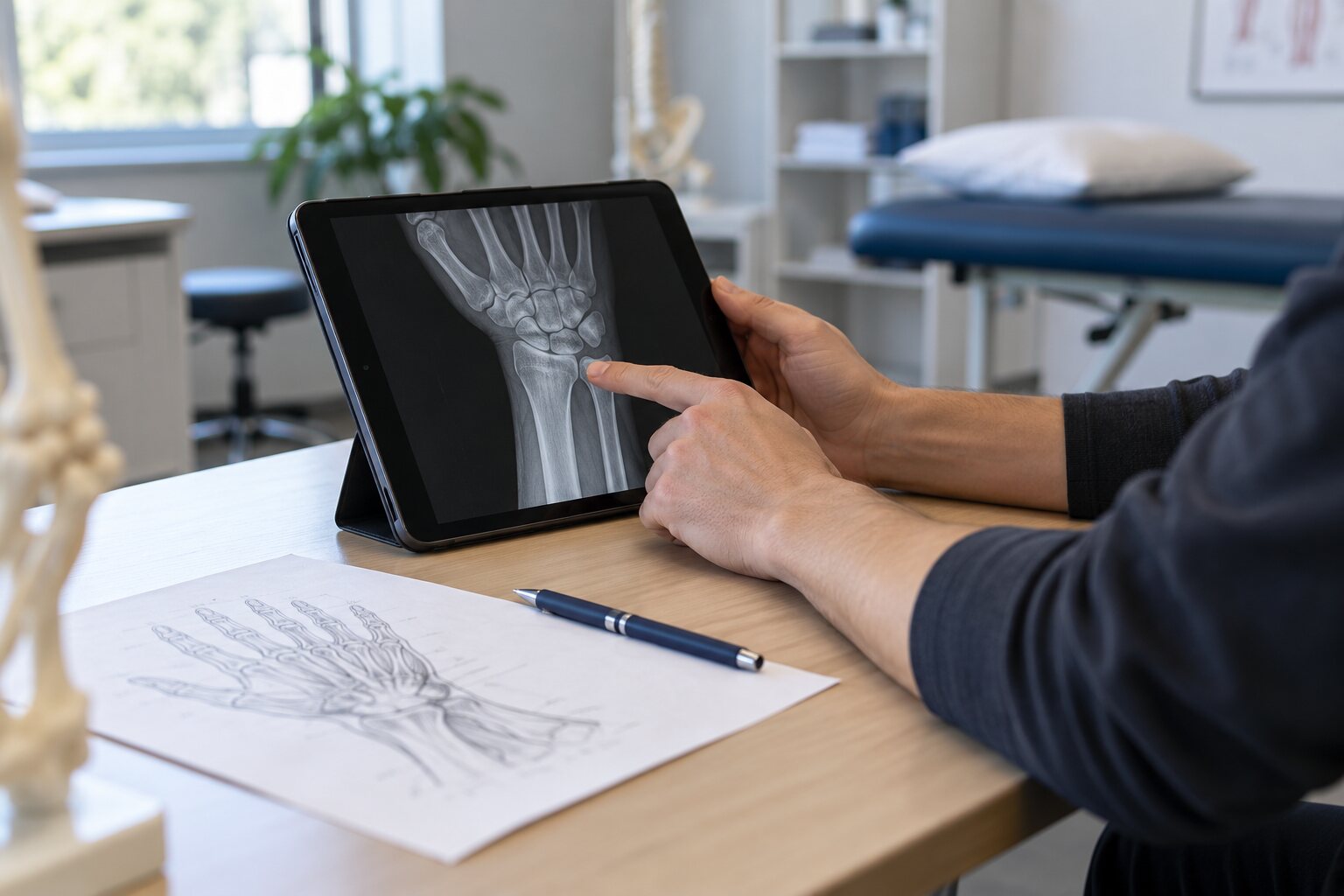
X-rays are useful for many fractures, dislocations and bony joint changes. They provide much less detail about muscles, tendons and other soft tissues. A clinician may choose ultrasound, MRI or another test for a different question; more detailed imaging is not automatically the best first step.
X-rays use ionizing radiation. Tell the referring clinician and radiographer if you may be pregnant so they can plan appropriately.
Reference: RadiologyInfo (ACR / RSNA) — Bone X-ray
After a fall or injury: is a fracture possible?
Seek prompt medical assessment if you cannot bear weight, swelling is substantial or increasing, or pain is severe or worsening. A clinician can decide whether an X-ray is needed; swelling alone does not identify the injury.
For an acute wrist injury after a fall, X-rays are commonly the first imaging test. Bone health also matters: new back pain after minor trauma deserves particular attention in someone with osteoporosis or long-term steroid use. The right test depends on the site and clinical findings.
Reference: NHS — Sprains and strains · RadiologyInfo (ACR / RSNA) — Acute Hand and Wrist Trauma · RadiologyInfo (ACR / RSNA) — Low Back Pain: Appropriate Imaging
Lower back pain: why imaging often is not the first step
For most new lower back pain without warning signs, routine imaging does not speed recovery. Scans can also show changes unrelated to the pain. Choosing Wisely Canada recommends making the decision around the history and examination, rather than ordering a scan simply because pain is present.
Back pain with fever or feeling unwell needs prompt medical assessment. Tell your clinician about a cancer history or unexplained weight loss. If symptoms persist or worsen despite care, arrange reassessment. There is no automatic deadline that makes everyone need an X-ray; suspected nerve compression or infection may require a different test, such as MRI.
Reference: Choosing Wisely Canada — Imaging Tests for Lower Back Pain · RadiologyInfo (ACR / RSNA) — Low Back Pain: Appropriate Imaging · NHS — Back pain
Persistent joint pain: is MRI always better?
The question being investigated matters more than choosing the most detailed scan. For suspected knee osteoarthritis, when imaging is needed, weight-bearing X-rays are generally more useful as the initial test than MRI. Choosing Wisely Canada advises against routine MRI for osteoarthritis or suspected degenerative meniscal tears. Examination findings and response to care help determine whether further investigation is worthwhile.
Reference: Choosing Wisely Canada / CASEM — Sport and Exercise Medicine Recommendations
What if my X-ray is normal but I still hurt?
A normal image does not explain every symptom or exclude every injury. For a wrist injury that remains suspicious despite normal initial X-rays, repeat X-rays, CT or MRI may be appropriate. Ask about follow-up if pain or function is not improving; a normal first image is not, by itself, clearance to return to sport.
Reference: RadiologyInfo (ACR / RSNA) — Acute Hand and Wrist Trauma
Four useful questions before an imaging test
Use the discussion to understand the plan, including what happens if no scan is needed today.
- What problem are we trying to confirm or rule out?
- How would the result change my treatment or activity advice?
- Why is this the most suitable test for that question?
- When should I be reassessed, and which new symptoms need urgent care?
Where physiotherapy fits
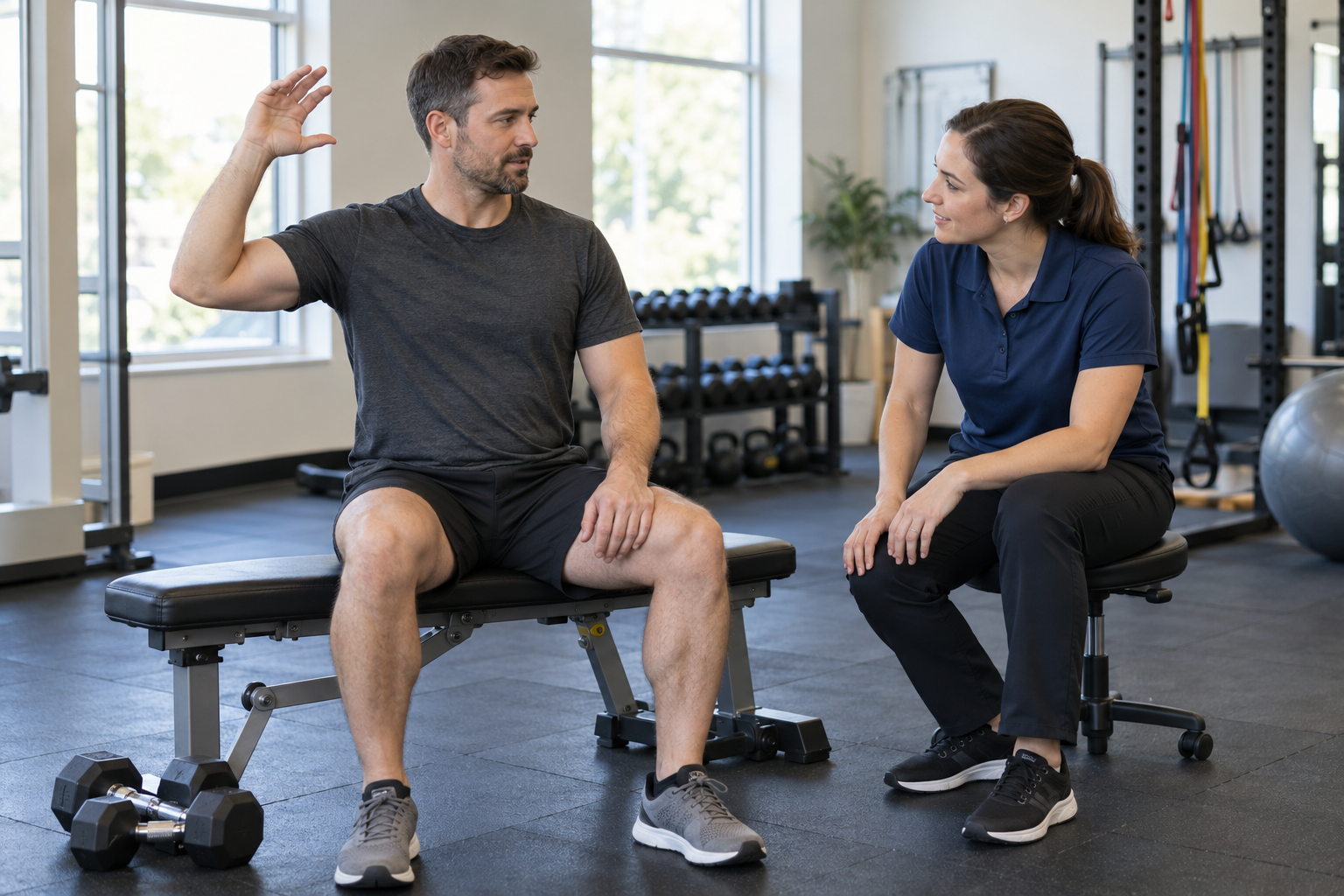
At Harrison Zhang Physio in Markham, an assessment considers your symptoms, health history, movement and goals. Bring existing imaging reports if you have them. Harrison can discuss rehabilitation and whether further medical assessment is appropriate. Care is available in English, Mandarin Chinese and Cantonese at Space Wellness.
Sources & further reading
- Choosing Wisely Canada — Imaging Tests for Lower Back Pain ↗
- Choosing Wisely Canada / CASEM — Sport and Exercise Medicine Recommendations ↗
- RadiologyInfo (ACR / RSNA) — Bone X-ray ↗
- RadiologyInfo (ACR / RSNA) — Low Back Pain: Appropriate Imaging ↗
- RadiologyInfo (ACR / RSNA) — Acute Hand and Wrist Trauma ↗
- NHS — Back pain ↗
- NHS — Sprains and strains ↗
External references support the general information in this article. Clinic information is specific to Harrison Zhang Physio. Sources checked: .
General information only. This article does not diagnose an injury or replace an individual assessment. Your care and recovery will depend on your own circumstances.