Shoulder pain & next steps
Shoulder pain at night or when lifting your arm: when to see a physio?
Shoulder pain disrupting sleep, reaching or exercise? Learn when to book an assessment and when to seek medical care, with Markham and North York options.
At a glance
If shoulder pain repeatedly interrupts sleep or limits dressing, reaching or training, a physiotherapy assessment is a reasonable next step. Mild symptoms that are clearly improving may be monitored with temporary activity adjustments. Sudden severe pain, major injury, new weakness or the warning signs below need medical assessment first.
When should shoulder pain be assessed urgently?
Call 911 for shoulder or arm discomfort with chest pressure, shortness of breath, cold sweating or faintness. A heart attack can occur without obvious chest pain. Do not wait for a physiotherapy appointment.
Seek urgent same-day medical care for sudden severe pain, inability to move the arm, deformity after an injury, major swelling, a hot/red shoulder with fever, or persistent numbness or new weakness. A cold or discoloured arm, major trauma or severe illness warrants emergency care.
Reference: NHS — Shoulder pain: self-care and warning signs · Heart & Stroke — Heart attack warning signs
Does night pain mean a rotator cuff tear?
Night pain alone cannot identify the cause. Rotator cuff-related pain can be aggravated by raising the arm or lying on that shoulder; frozen shoulder and other conditions can also disturb sleep. The pattern, injury history, strength and movement examination matter more than one symptom.
Tell the clinician if pain is constant and unexplained, keeps worsening, or comes with fever, unexplained weight loss or a history of cancer. A shoulder that became weak after a fall or heavy lift should not simply be assumed to need strengthening.
Reference: NHS — Shoulder impingement: symptoms and similar presentations · BESS — Shoulder pain: primary, community and intermediate care guidelines
When is it reasonable to monitor, and when should you book?
For mild, improving symptoms without injury or warning signs, temporarily reduce the activity that provokes pain and keep comfortable movement. If symptoms are worsening or are not starting to improve after about two weeks, arrange a clinical review. You can seek help earlier when sleep, work or essential daily tasks are affected.
Before your visit, note three things: which task is difficult, whether the problem began after an injury or a change in training, and what happens later that day or the next morning. This is more useful than repeatedly testing a painful movement to see if it still hurts.
What will a shoulder physiotherapy assessment involve?
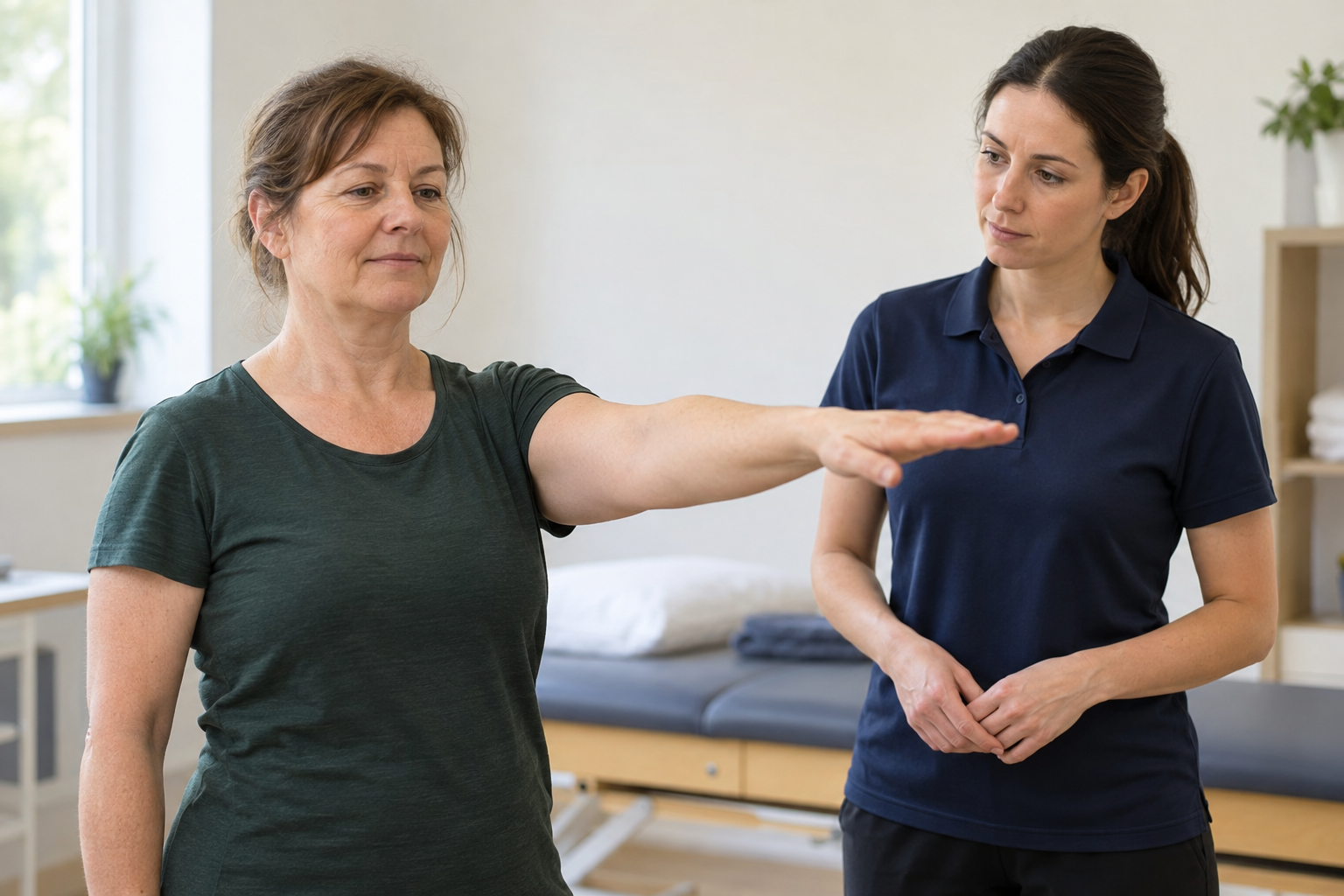
Harrison will discuss your goals and examine relevant shoulder movement, strength and everyday tasks. Neck movement or neurological screening may be included when symptoms travel down the arm. The findings guide whether rehabilitation is appropriate or medical review is needed.
For rotator cuff tendinopathy, current guidance supports education and an active rehabilitation program. Hands-on treatment may help short-term symptoms, but the plan also needs movement and loading matched to your capacity. Progress can be tracked through sleep, reaching a shelf and returning to a chosen exercise—not pain scores alone.
Reference: JOSPT (2025) — Rotator cuff tendinopathy clinical practice guideline
What can you change while waiting for an assessment?
Try supporting the arm with a pillow when resting or sleeping, and avoid direct pressure on the sore shoulder if that aggravates it. Choose the most comfortable position rather than forcing one 'correct' posture. Temporarily scale back painful overhead or heavy gym work; a tailored plan can help you rebuild it.
Reference: Wiltshire Health and Care NHS — Rotator cuff-related shoulder pain
Do I need an MRI before booking?
Not routinely for suspected uncomplicated rotator cuff tendinopathy. An assessment can help decide whether imaging would change management. Injury, marked weakness, concerning symptoms or failure to improve can change that decision. Bring any existing reports; do not delay urgent care while arranging a scan.
Reference: JOSPT (2025) — Rotator cuff tendinopathy clinical practice guideline
Where can I see Harrison in Markham or North York?
Harrison Zhang, MScPT, is an Ontario Registered Physiotherapist with clinical experience in shoulder rehabilitation. His approach connects hands-on care, when appropriate, with movement practice and progressive exercise. Appointments are available in English, Mandarin Chinese and Cantonese.
At Space Wellness, 2800 John Street, Unit 21, Markham, the initial assessment and treatment is 60 minutes and CAD $145. Use the form below or call +1 (942) 380-2599 for availability. A form submission is a request; the appointment is confirmed when Harrison contacts you.
For North York, use Harrison's direct Jane booking at NTO Wellness & Rehab Centre, 121 Willowdale Avenue, Unit 104. NTO's own fees and availability apply. If you live in Richmond Hill, compare these two locations using the links below; in-person care takes place in Markham or North York, rather than at a Richmond Hill branch.
Frequently asked questions
Should I wait until I cannot lift my arm?
No. Repeated sleep disruption or difficulty with ordinary tasks is enough reason to ask for an assessment. New inability to lift the arm, especially after an injury, needs urgent medical review.
Can I keep exercising with shoulder pain?
Often some activity can continue, with the load and movement adjusted. Avoid pushing through a worsening pattern, sudden weakness or neurological symptoms; get assessed before resuming heavy overhead training.
Is a scan required to start physiotherapy?
Not in every case. The history and examination guide whether imaging or medical assessment is needed before rehabilitation.
Do I need a doctor's referral in Ontario?
You can access a physiotherapist directly. Some insurance plans require a referral for reimbursement, so check your own plan.
Can I book in North York or travel from Richmond Hill?
Yes. Choose Harrison at NTO in North York through its Jane booking, or request Space Wellness in Markham through the form. Richmond Hill residents can choose either actual location. Clinic fees and availability differ.
Sources & further reading
- NHS — Shoulder pain: self-care and warning signs ↗
- Heart & Stroke — Heart attack warning signs ↗
- Ontario Physiotherapy Association — Access and payment ↗
- NHS — Shoulder impingement: symptoms and similar presentations ↗
- BESS — Shoulder pain: primary, community and intermediate care guidelines ↗
- JOSPT (2025) — Rotator cuff tendinopathy clinical practice guideline ↗
- Wiltshire Health and Care NHS — Rotator cuff-related shoulder pain ↗
External references support the general information in this article. Clinic information is specific to Harrison Zhang Physio. Sources checked: .
General information only. This article does not diagnose an injury or replace an individual assessment. Your care and recovery will depend on your own circumstances.